UAS airworthiness connects a sound aircraft design with the condition of the aircraft that actually flies. Design assurance addresses errors in requirements and implementation; continued safety depends on preserving the configuration, maintenance, and operating assumptions on which that design was assessed. For an unmanned aircraft system, the ground station, command link, and external services can matter as much as equipment onboard.
An airworthiness certificate also has a specific legal meaning. The FAA distinguishes approval of a design, approval of production, and certification of an individual aircraft. These answer different questions, and none should be read as unrestricted permission for every mission. FAA certification guidance explains those distinctions.
This explainer uses U.S. civil aviation and European Union examples. Their approval routes differ, but both make the intended operation central to assessing a UAS.
On This Page
- What an approval actually covers
- Where the system boundary belongs
- How design assurance works
- Failure modes that change the architecture
- How maintenance preserves the safety assumptions
- How the application changes the tradeoffs
- What to request before accepting a system
What an approval actually covers
In the FAA framework, a type certificate approves a design against its applicable requirements. A production certificate addresses the manufacturer's ability to reproduce the approved design. An airworthiness certificate concerns an individual aircraft's conformity to its approved design, where applicable, and condition for safe operation. Experimental airworthiness certificates carry purpose-specific restrictions.
Ordinary Part 107 operations generally do not require aircraft certification. They still require a safe aircraft: 14 CFR 107.15 requires the remote pilot to check its condition before each flight and prohibits continued flight when the system is no longer safe. Specific routes can impose more: Category 4 operations over people require an airworthiness certificate and associated conditions under 14 CFR 107.140.
For certain UAS, the FAA uses special-class certification under §21.17(b), including a durability and reliability approach. Its special-class criteria guidance describes a route built around demonstrating that the aircraft operates reliably within its intended conditions. Individual criteria remain specific to the applicant and design.
In Europe, EASA's design verification report guidance distinguishes a design verification report, or DVR, from a type certificate. A DVR documents compliance with applicable design objectives and records limitations and assumptions. It can support an operational authorisation; it is not itself that authorisation.
When a supplier says “approved,” ask which document, which configuration, and which operation the statement covers.
Where the system boundary belongs
Start with functions rather than a list of boxes. The aircraft must obtain a usable estimate of its state, determine the commanded motion, and produce the necessary forces. The remote crew needs timely status information and an unambiguous way to issue commands. Power, navigation inputs, communication, and software connect those functions.
A ground computer outside the airframe can therefore affect flight safety. So can a support device or external service. In an actual FAA certification example, the final January 2022 criteria for the Amazon MK27-2, section D&R.105, require the applicant to identify associated elements and interface conditions affecting airworthiness. They allow specified equipment or minimum specifications covering such matters as compatibility, reliability, performance, and pilot alerts.
The engineering implication is to define the contract at each boundary: what information crosses it, when it must arrive, how invalid or missing information is detected, and which function remains responsible after a fault. “Uses the same protocol” alone does not establish those properties.
Command-and-control, usually shortened to C2, illustrates the issue. A link can become too delayed for its intended function before it disconnects. The FAA's Form 7711-2 guidance for advanced Part 91 operations asks separately for lost-link thresholds, lost-link actions, navigation degradation thresholds, and navigation contingencies. A return command deserves scrutiny if the navigation input needed to execute it has also failed.
How design assurance works
Design assurance is the disciplined development work used to reduce the chance that a design error reaches the aircraft. It complements tests of the finished system.
The FAA's AC 20-174 recognises SAE ARP4754A as an acceptable development-assurance method. It distinguishes requirements validation, asking whether requirements correctly describe what is needed, from implementation verification, asking whether the design satisfies them. The circular is guidance, not a regulation, and calls for early coordination of its use with the FAA.
Consider an illustrative requirement to respond safely to C2 loss. Testing that a timer triggers proves little if the requirement never specified what happens during takeoff, during landing, or after navigation degradation. Validation addresses that missing intent. Verification then checks the implemented responses against the agreed requirements, with traceability between them.
Safety assessment informs how demanding the assurance activities should be. A development assurance level describes required development rigour; it is not a measured probability that a particular aircraft will crash. The practical sequence runs from the consequences of a failed function, through allocated safety requirements, to implementation and verification. Integration testing then checks the interactions that isolated component tests cannot establish.
At the implementation level, AC 20-115D recognises DO-178C/ED-12C for airborne software assurance. AC 20-152A recognises DO-254/ED-80 and adds guidance for airborne electronic hardware, including commercial devices and circuit-board assemblies. Their applicability must be established for the project. Naming either document on a component brochure does not establish compliance of the complete UAS.
Failure modes that change the architecture
Redundancy helps only when the backup remains usable after the initiating failure. Two processors sharing the same defective software or power supply can fail together. EASA's final Light-UAS.2510 means of compliance, Issue 1, February 2024 explicitly addresses common causes, including shared hardware, software, power, and external inputs.
The following questions connect those principles with the FAA's contingency guidance and NASA's historical C2 incident research. They are engineering synthesis, not universal certification test criteria.
| Failure or change | Why it matters | Question for the design review |
|---|---|---|
| C2 messages arrive late or disappear | The aircraft and crew may have different views of the active state | What detects degradation, what action follows, and how is command authority restored? |
| Navigation becomes unreliable | A planned return or holding action may depend on unavailable information | Which recovery actions remain achievable with the surviving inputs? |
| Shared power or software fault | Nominally redundant channels may be lost together | Which dependencies can defeat both the primary function and its backup? |
| Unintended control transfer | A functioning aircraft may receive commands from the wrong station or operator | How are transfer request, acceptance, and current authority made clear? |
| Software or ground-station update | The tested combination may no longer be the installed combination | Which requirements and integration tests must be revisited? |
NASA's C2-related incident study used pilot accounts to identify issues including interference, latency, accidental control transfer, and lost-link management. These reports demonstrate plausible failure mechanisms; they do not establish a fleet-wide failure rate.
A useful review follows a fault through detection, aircraft response, crew indication, and recovery. It also asks what happens if the crew cannot intervene. An alert is a useful mitigation only when the operator can understand it and act in time.
How maintenance preserves the safety assumptions
The design's safety case depends on what stays true in service. Instructions for Continued Airworthiness, or ICA, connect that design with the inspections, servicing, replacements, and limitations needed to keep it usable.
EASA's SC Light-UAS Medium Risk, Issue 01, section 2625, requires ICA appropriate to the design and intended operation, including a distinct airworthiness-limitations section. Its flight-manual provisions also address transportation, reconfiguration, and storage. Airworthiness does not begin only when the motors start.
Keep scheduled maintenance separate from actions triggered by an event. A routine inspection interval cannot answer every question raised by an operating-limit exceedance or configuration change. FAA Order 8130.34D illustrates this through operating limitations addressing maintenance records, exceeded limits, life-limited parts, and changes. Those provisions have stated applicability; they are not a maintenance schedule for every small drone.
For a program manager, the practical connection is a traceable record of the aircraft's hardware, software, associated equipment, maintenance status, and unresolved defects. If a replacement changes an interface or an update changes a safety response, assess the change before relying on the earlier demonstration. A successful power-on check cannot by itself establish equivalence.
Service feedback should reach the organisation responsible for the design. Repeated unexplained resets or control-transfer difficulties deserve investigation even when every flight has ended normally. NASA's incident work shows why minor events can expose design and human-interface weaknesses before a more serious outcome.
How the application changes the tradeoffs
The following are illustrative application comparisons, not claims that a particular operator has received an approval.
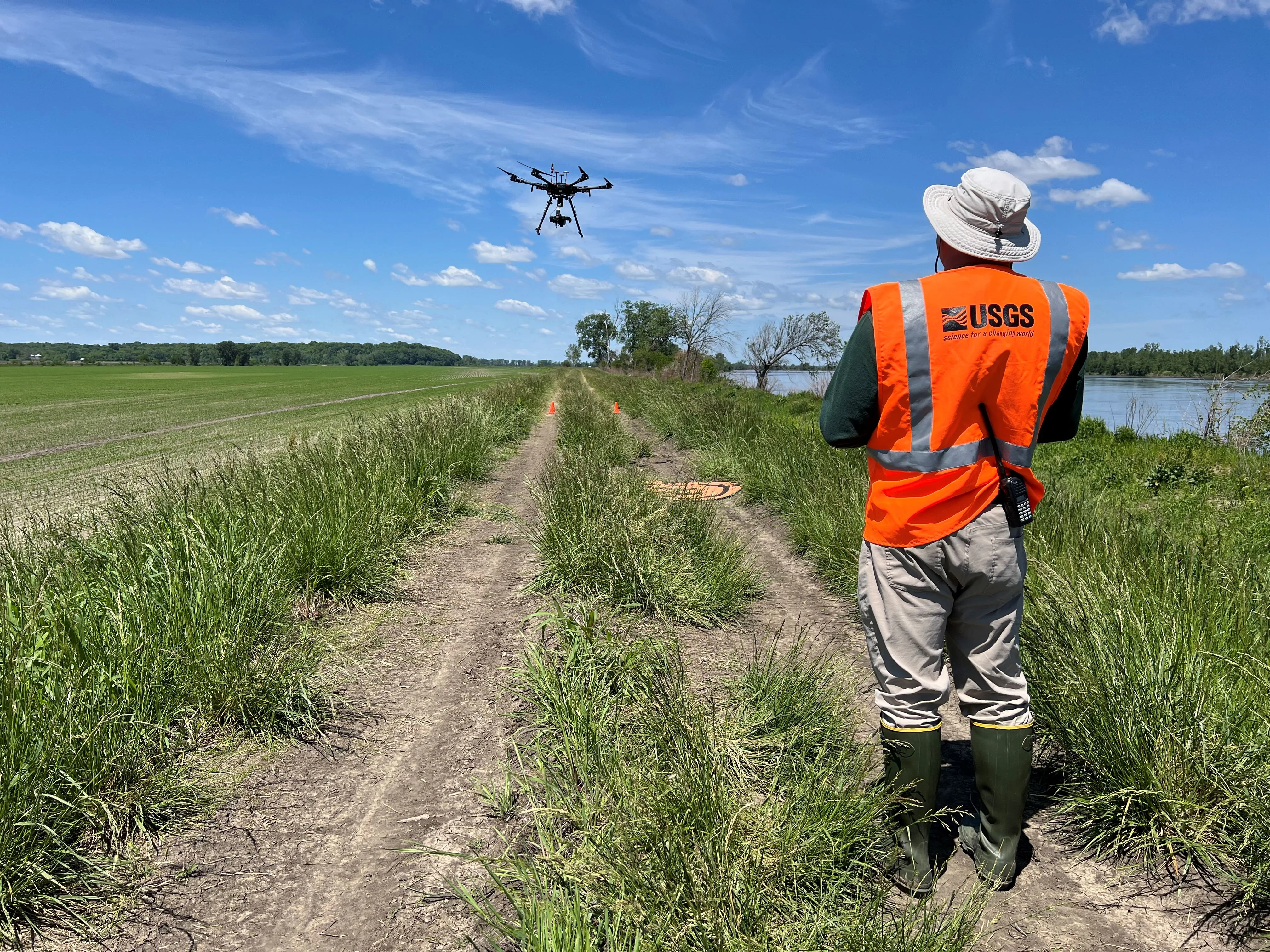
For local visual inspection, direct observation can help the crew recognise abnormal behaviour, but it does not make an unsafe aircraft acceptable. Under Part 107, the before-flight condition check still applies. A practical evaluation should ask whether the operator can recognise damage, identify the installed configuration, and follow the relevant maintenance instructions.
For package delivery, the FAA identifies type certification as an enabler of more complex operations. Evaluate the route and payload configuration together with the aircraft. Demonstrating reliability under a limited operating concept does not automatically substantiate another environment or a different mission.
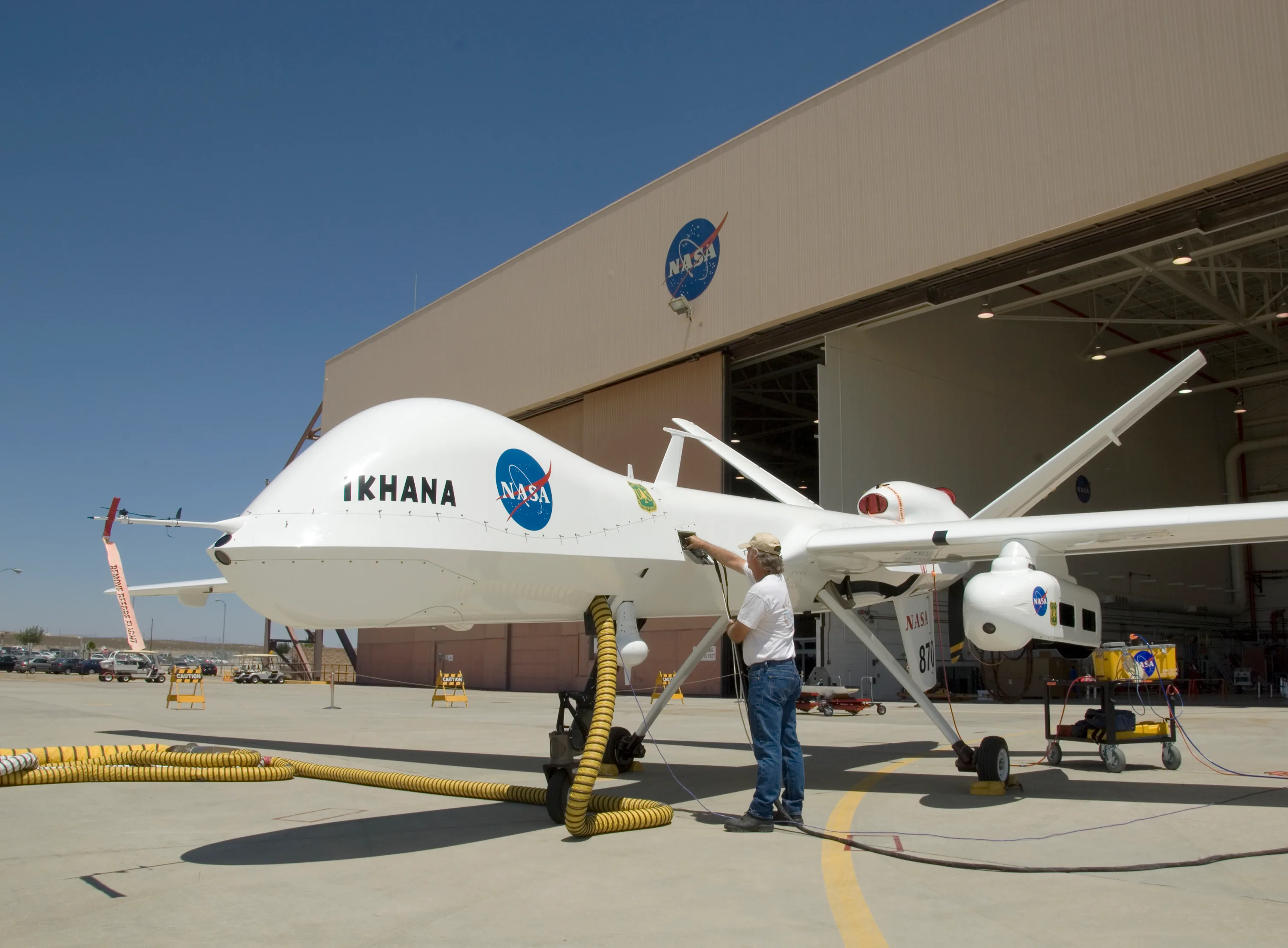
For long-range research, the ground segment becomes especially visible. NASA's historical Ikhana preflight record describes an aircraft acquired with a mobile ground control station and satellite communications for control and research data. It is a concrete example of why an unmanned-aircraft program extends beyond the airframe.
The performance tradeoff is between mission capability and the margins required to retain safe behaviour. EASA's Light-UAS performance provisions require consideration of loading, environment, installation losses, power demands, and failure conditions. Extra equipment therefore needs evaluation in the installed configuration. More sensors or a second radio do not, by themselves, prove a safer aircraft; ask what survives the relevant fault and what performance remains available.
For example, reserve energy allocated to a contingency cannot also be treated as energy available for the planned mission. A more conservative mission limit may reduce useful coverage while preserving a recovery option. The appropriate margin comes from the aircraft's substantiated performance and intended conditions, not a universal percentage.
What to request before accepting a system
Request the approval or design-assessment document with its limitations, the configuration it covers, the flight manual, and the maintenance instructions. Then choose one consequential failure, such as C2 loss, and follow it across the aircraft, ground station, crew procedures, and service records.
The strongest answer explains both why the response was adequate when designed and how the operator will know it remains adequate after repairs and updates. If those two explanations refer to different configurations or operating assumptions, the gap needs resolving before the earlier safety conclusion can support the proposed mission.
Sources
- UAS Certification: Agency overview distinguishing the three certification functions.
- 14 CFR 107.15: Condition for safe operation: Binding U.S. requirement for safe condition under Part 107.
- 14 CFR 107.140: Category 4 operations: Binding U.S. requirements for Category 4 operations over people.
- Certification for Advanced Operations: Special-class UAS criteria: Agency explanation of the special-class and durability-and-reliability approach.
- Design verification report: Agency explanation of the scope and limits of a DVR.
- Final airworthiness criteria: Amazon Logistics MK27-2, January 27, 2022: Model-specific final criteria, particularly D&R.105 and D&R.110.
- Instructions for the Certificate of Waiver or Authorization: Operational application guidance covering link and navigation contingencies.
- AC 20-174: Development of Civil Aircraft and Systems: Guidance on requirements validation and implementation verification.
- AC 20-115D: Airborne Software Development Assurance: Guidance recognising airborne software assurance documents.
- AC 20-152A: Development Assurance for Airborne Electronic Hardware: Guidance recognising airborne hardware assurance documents.
- MOC Light-UAS.2510-01, Issue 1, February 1, 2024: Final means of compliance discussing common causes and failure management.
- C2-Related Incidents Reported by UAS Pilots, 2016: Historical institutional research based on pilot incident accounts.
- SC Light-UAS Medium Risk 01, Issue 01, December 17, 2020: Special condition covering performance, manuals, and continued airworthiness.
- FAA Order 8130.34D, September 8, 2017: Agency procedures and operating limitations with stated applicability.
- Pre-Flight Check on Ikhana/Predator B Aircraft: Historical photograph and description of the aircraft and ground segment.
Last checked: September 6, 2026.