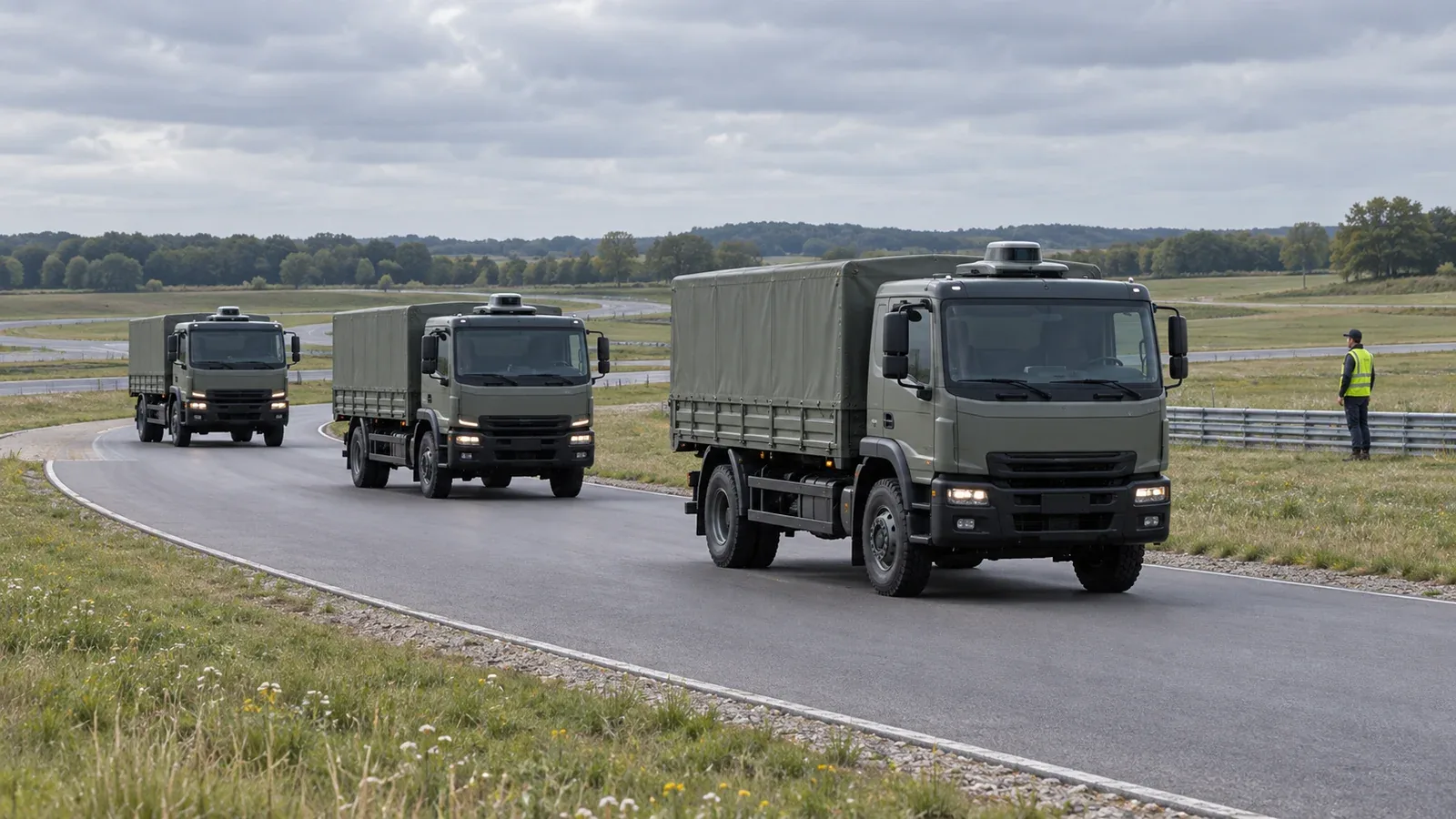
Convoy autonomy allows one vehicle to establish a route while following vehicles control their own movement along it. In a leader-follower system, the leader may have a human driver, while each automated follower combines information about the leader with its own position, surroundings and vehicle controls. The engineering challenge is to preserve a usable path and separation as conditions change throughout the convoy.
The first distinction is what the follower actually controls. Cooperative adaptive cruise control can coordinate speed and braking while a driver still steers. A driverless follower also needs lateral control, obstacle handling and a defined response when it can no longer follow. FHWA's 2017 truck-platooning research explicitly retained driver responsibility for steering and monitoring traffic.
On This Page
- Follow a path, not just a moving point
- The architecture inside each follower
- Interfaces that make a convoy work
- Spacing and stability across the whole convoy
- What happens when following breaks down
- Applications and the evidence behind them
- Evaluate the follower under the actual mission
Follow a path, not just a moving point
Imagine a leader turning around the corner of a building. Steering directly toward its latest position can send the follower across the inside of the turn. Reconstructing the route already driven gives the follower a reference through the corner instead.
There are two useful ways to obtain that history. The leader can transmit route or vehicle-state information, or the follower can observe the leader and build a history using its own sensors. Communication is therefore a design choice, not a defining requirement of every leader-follower system.
In Nestlinger and colleagues' 2022 implementation, the follower stored observations of the leader, accounted for its own motion, and smoothed the estimated path before tracking it. Its driving function used onboard sensing without relying on GPS or vehicle-to-vehicle communication. Differential GPS supplied independent reference measurements for the field experiment.
A path also needs an associated speed policy. Knowing where the leader went does not establish when the follower should arrive there. The distinction between a geometric path and a timed trajectory is developed further in path planning algorithms for autonomous vehicles.
The architecture inside each follower
Four functions help explain the system boundary:
- Estimate motion and surroundings. Determine the follower's position, heading and speed, observe the leader where applicable, and identify relevant obstacles.
- Construct a reference. Turn observations or received route data into a path and a desired separation or speed.
- Control the vehicle. Convert tracking errors into steering, propulsion and braking commands.
- Manage operating modes. Decide whether automated following is available, degraded, stopped or handed back to an operator.
These are functional divisions, not a mandatory arrangement of computers. FHWA's 2015 research platform illustrates the separation between communications, positioning and vehicle control. It fused satellite navigation, inertial sensing and wheel-speed information, while dedicated electronic interfaces handled torque and braking commands.
That separation matters when retrofitting a truck. A working perception algorithm cannot steer a vehicle unless the vehicle interface accepts its commands and reports what actually happened. The National Research Council's 2014 AMAS discussion distinguished the autonomy sensor/software kit from the kit interfacing with steering, braking, acceleration and shifting. This remains a useful architectural distinction; the report's cost and development-status observations belong to 2014.
Sensor count alone is a poor measure of robustness. For example, a vehicle position and a leader observation must refer to compatible times and coordinates before they can define a meaningful relative path. The same-publication explanation of sensor fusion for autonomous vehicles covers those timing, calibration and uncertainty dependencies.
Interfaces that make a convoy work
A radio link supplies data; it does not by itself establish shared meaning or authority. FHWA's platform exchanged speed, heading, location and gap information. An integration specification should go further and explain how the receiver interprets each message.
The following questions are an engineering synthesis of the cited vehicle-control architectures, intended for an interface review rather than as a universal message standard:
| Interface | Questions to resolve before integration |
|---|---|
| Leader or predecessor to follower | Which vehicle sent the data, when was it measured, which coordinate frame applies, and how is stale or out-of-order information rejected? |
| State estimator to path controller | Which vehicle reference point does the pose describe, what uncertainty accompanies it, and how is a reset communicated? |
| Autonomy to steering and brakes | Are commands angles, curvature, speed, torque or acceleration; what limits apply; and what feedback confirms execution? |
| Operator to convoy | Who can enable following, select a leader, request a stop or take control, and how does each vehicle confirm the mode? |
Treat a leader change as a state transition. Selecting a different sender or visual object must also establish the correct reference path and separation. Otherwise, data that are individually valid can belong to the wrong formation.
For a mixed fleet, ask the integrator to demonstrate those transitions across the actual vehicle interfaces. A successful connection between software modules is only the beginning of the open-architecture integration problem.
Spacing and stability across the whole convoy
Separation can be specified as distance or as a time-related gap. A common constant-time-headway formulation adds a standstill clearance to speed multiplied by the selected headway:
Desired gap = standstill clearance + headway × follower speed.
With clearance in metres, headway in seconds and speed in metres per second, the result is metres. This is a control-policy equation, not a stopping-distance calculation or a recommended operating gap. Ploeg and colleagues used this formulation in their experimental CACC work.
String stability asks whether disturbances grow as they pass through the convoy. A small speed change near the front can become a larger correction farther back even when each vehicle seems capable of following its immediate predecessor. The Ploeg study combined local sensing with communicated information and evaluated the result on six passenger vehicles. Its findings support the mechanism under the studied conditions, not an unrestricted spacing rule for loaded trucks.
Steering needs a separate assessment. A 2026 preprint by Li, Darbha and Zhou studies how lateral path-tracking errors propagate from vehicle to vehicle. Its distinction is useful: smooth speed traces alone cannot demonstrate that every follower stays within the intended corridor. The paper's controller-specific analysis should not be generalized into a claim that all sensor-only convoy designs fail.
For evaluation, request results from the last follower as well as the first. Report the chosen error measure and reference path, vehicle loading, communication delay, speed range and maneuver. Changing any of those conditions can change what the result establishes.
What happens when following breaks down
The follower's view of the world changes after the leader passes. Another vehicle can enter the gap, a sensor can lose its target, or the vehicle may fail to execute a command. FHWA's road-user interaction research identifies cut-ins and other interactions as meaningful disruptions to truck platooning.
Use the table below to define and test responses. These are proposed engineering review questions drawn from the cited sensing, control and interaction research, not claims that every available system implements a particular fallback.
| Failure or disturbance | What the integration test should establish |
|---|---|
| Communication becomes delayed or unavailable | Whether local sensing can support a validated degraded mode, when shared data expire, and what happens before the vehicle exceeds that mode's limits. |
| Dust, glare or an obstruction hides the leader | How loss of tracking confidence is detected, how long any prediction remains usable, and when following ends. |
| Another vehicle enters the gap | Whether the follower responds to the intervening vehicle without mistaking it for the designated leader. |
| Position estimates drift or reset | How the system recognizes that stored path points and the current pose no longer align. |
| Steering or braking response differs from the command | How feedback exposes the mismatch and how the operator and other followers receive the fault state. |
The correct fallback depends on the operating environment and the remaining capability. A convoy with a driver in every cab has different handover options from one with unoccupied followers. Document the trigger, response, stopping or recovery location, and conditions for resuming; “an operator can intervene” leaves those decisions unresolved.
Do not confuse a small controller error with accurate route reproduction. The 2022 trajectory-following paper explicitly distinguishes error relative to its estimated reference path from offset relative to the leader's true path. Both measurements matter when clearance is tight.
Applications and the evidence behind them
Bulk logistics with fewer occupied follower vehicles is one representative application. At Camp Grayling in August 2019, the U.S. and U.K. demonstrated a six-vehicle convoy incorporating AMAS-equipped U.S. and British trucks. The Army's account describes bulk convoy transport connecting with separate last-mile ground and air capabilities. It establishes a historical integration demonstration, not current fleet-wide availability or guaranteed personnel savings.
Highway freight platooning emphasizes coordinated longitudinal control and potential aerodynamic benefits. The cited FHWA work investigated this with drivers retaining steering responsibility. Its application differs from an unoccupied follower negotiating an unstructured route; the word “platoon” does not resolve that distinction.
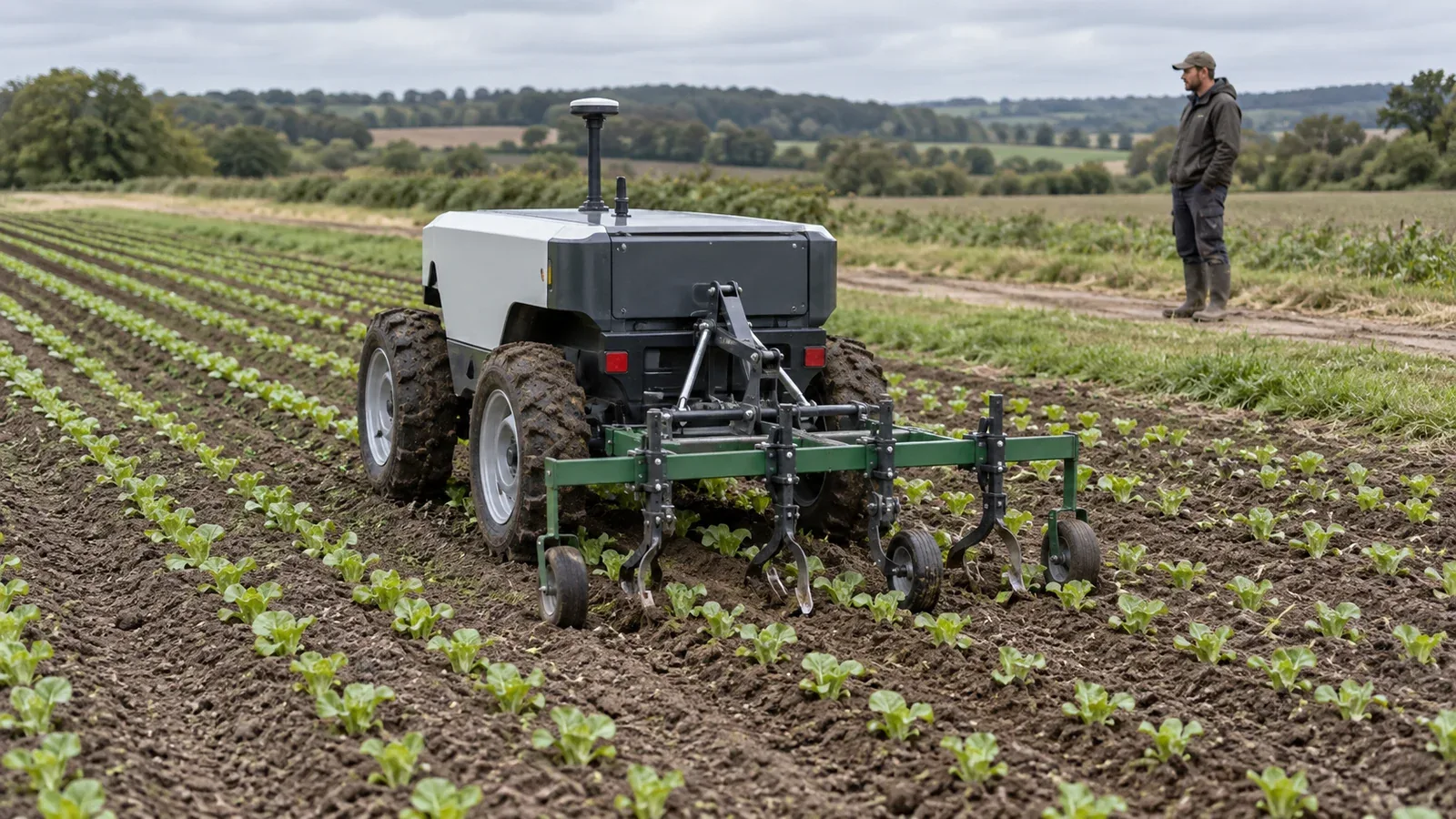
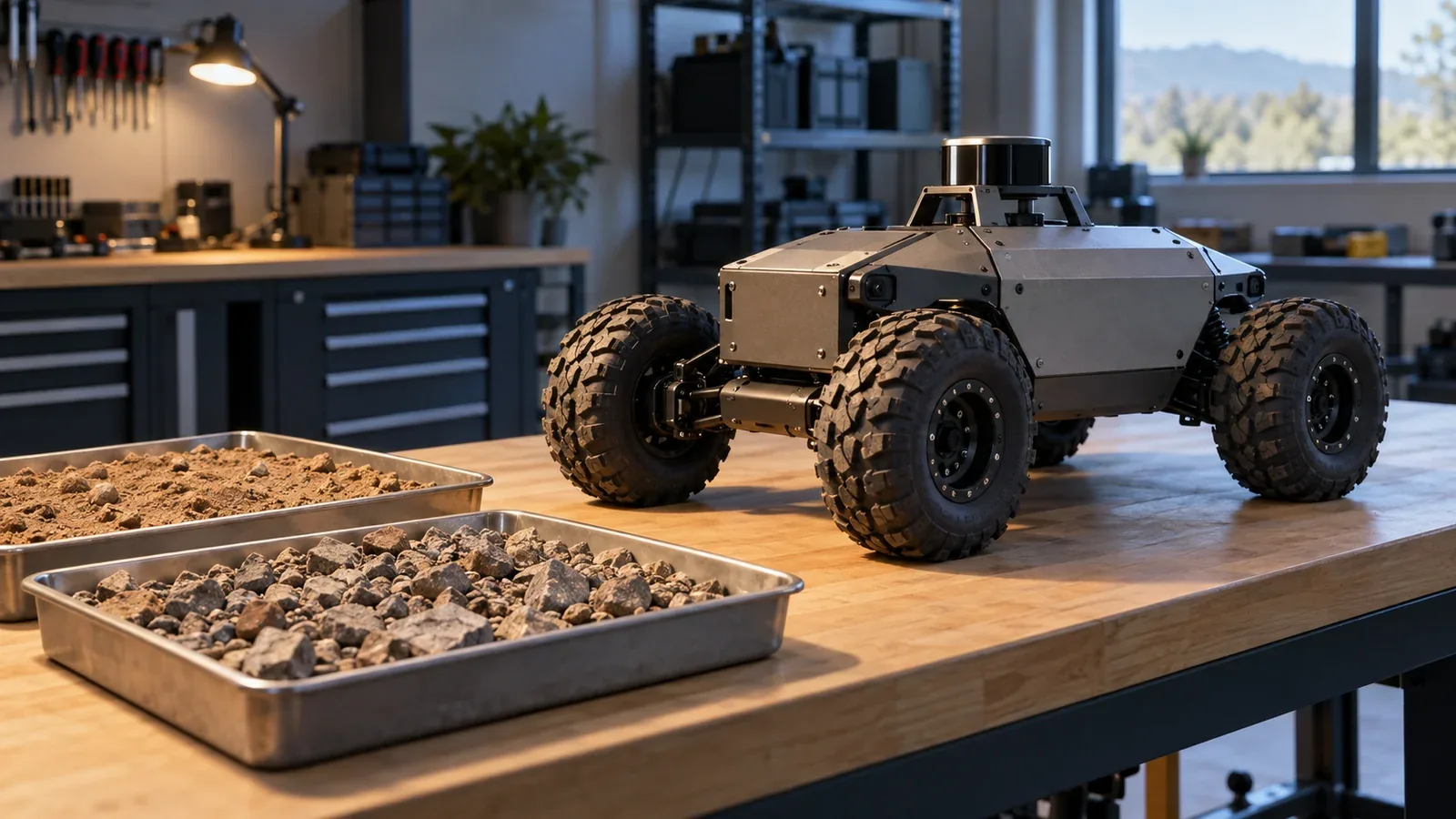
Repeated travel through an unstructured work area is another use case for leader-derived paths. The Nestlinger study demonstrated its approach on a gravel area, with two vehicles and a manually driven leader. Such evidence helps explain the control architecture, but it does not establish performance across all visibility, surface or traffic conditions.
These applications expose different tradeoffs. Adding shared information can improve coordination but adds communication dependencies. Relying on onboard observation removes that dependency from path estimation but makes leader visibility and local state estimation more central. Shorter gaps may serve a freight-efficiency objective, while the mission still needs room for disturbances, vehicle response and interaction with other traffic.
Evaluate the follower under the actual mission
Begin with the intended route, vehicle configurations and division of human responsibility. Then ask the supplier to demonstrate the following sequence on the proposed system:
- Establish the correct leader and engage following from a defined initial state.
- Track a turn and a changing speed, measuring route deviation and gap throughout the convoy.
- Introduce a relevant sensing or communication fault and observe the specified degraded behavior.
- Confirm that a vehicle-control fault reaches the operator and affects convoy behavior as intended.
- Recover or disengage without assuming that an unoccupied vehicle has an onboard driver available.
Keep one timeline across the vehicles in a trial, identifying the leader's maneuver, each follower's response and any intervention. State how the records were synchronized and preserve gaps in the observations. Compare lateral tracking and longitudinal spacing as separate results before combining them into a mission-level assessment. Record the vehicle configuration and the particular reference path used for each result, so a repeat can distinguish a changed test from a changed controller. This is a proposed reporting practice for the evaluation sequence, not a claim that the cited studies used a shared logging format or that one completed trial establishes deployment readiness.
This is a proposed evaluation sequence, not a substitute for a vehicle-specific safety assessment. Its purpose is to make the claimed capability concrete. Evaluate whether every follower maintains an appropriate path, separation and response within the intended conditions, including the moments when the leader's route or shared information is no longer enough.
Sources
- FHWA: Expanding the Freight Capacity of America's Highways (2017). Archived government research summary describing CACC, driver steering responsibility and conditional freight benefits.
- FHWA: Development of a Platform Technology for Automated Vehicle Research (2015). Government technical description of communications, fused positioning and vehicle-control interfaces.
- National Research Council: Logistics Mobility (2014). Institutional committee report describing AMAS architecture and logistics context.
- Nestlinger, Rumetshofer and Solmaz: Leader-Based Trajectory Following (2022). Primary research on estimated leader paths, onboard sensing and a limited field demonstration.
- Ploeg and colleagues: Design and Experimental Evaluation of Cooperative Adaptive Cruise Control (2011). Primary experimental research on time headway, communication and string stability.
- Li, Darbha and Zhou: Lateral String Stability for Vehicle Platoons (2026). Research preprint distinguishing propagation of lateral tracking errors from longitudinal behavior.
- FHWA: Effective Indicators of Partially Automated Truck Platooning (2021). Government research on interactions between platoons and other road users.
- U.S. Army: U.S., U.K. Coordinate Autonomous Last-Mile Resupply (2019). Official account of the coalition convoy and resupply demonstration.
Last checked: September 10, 2026.