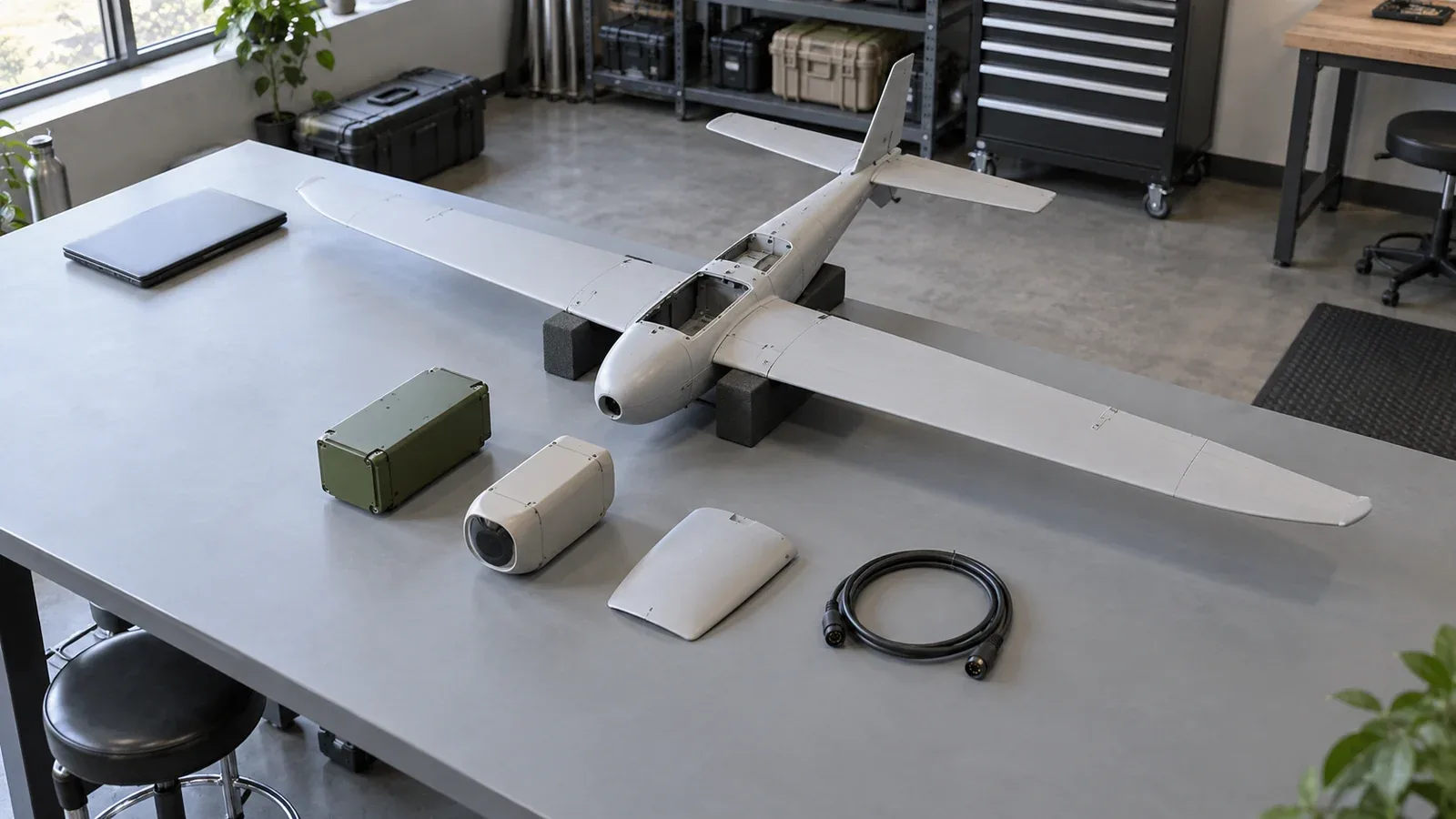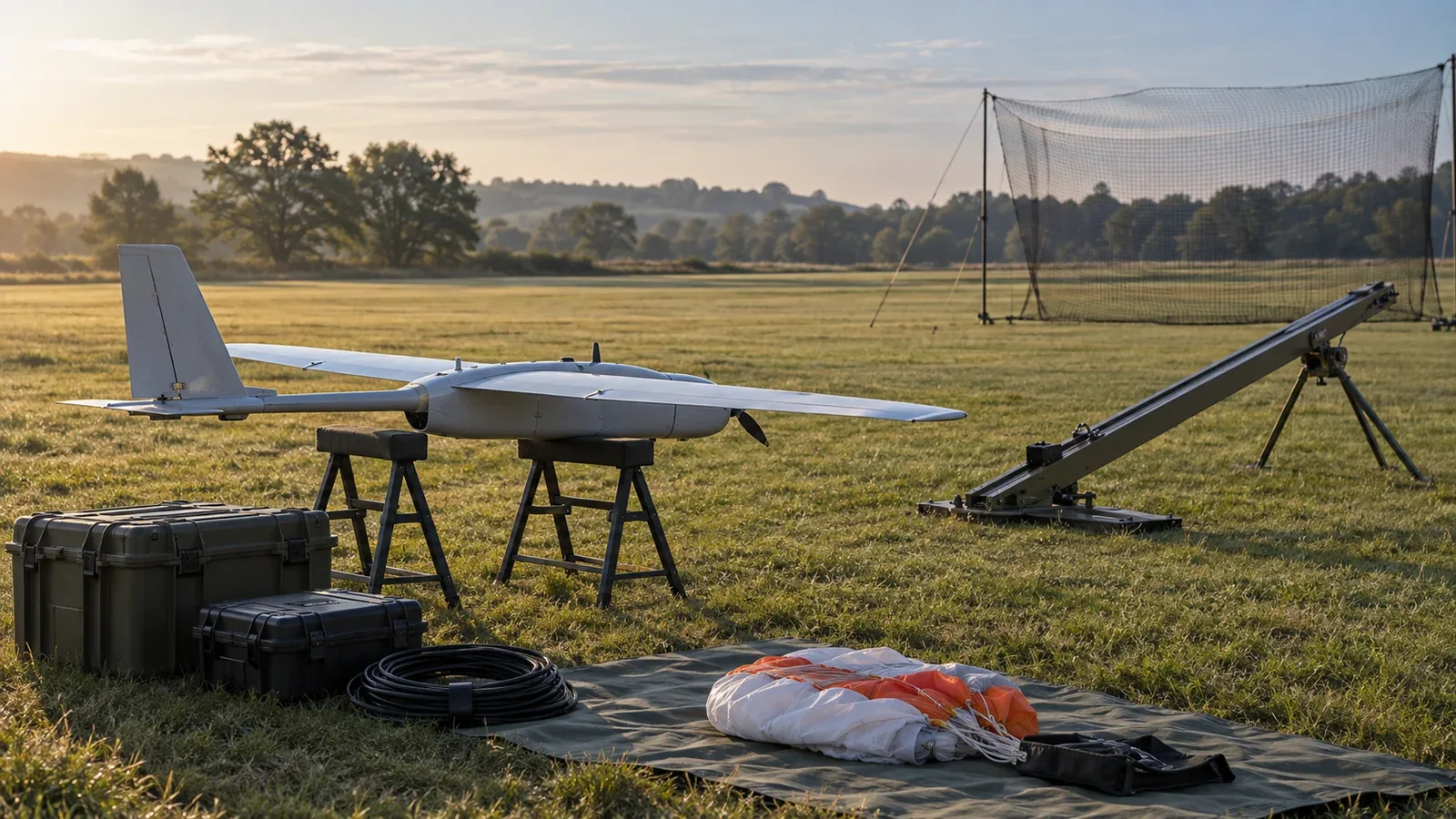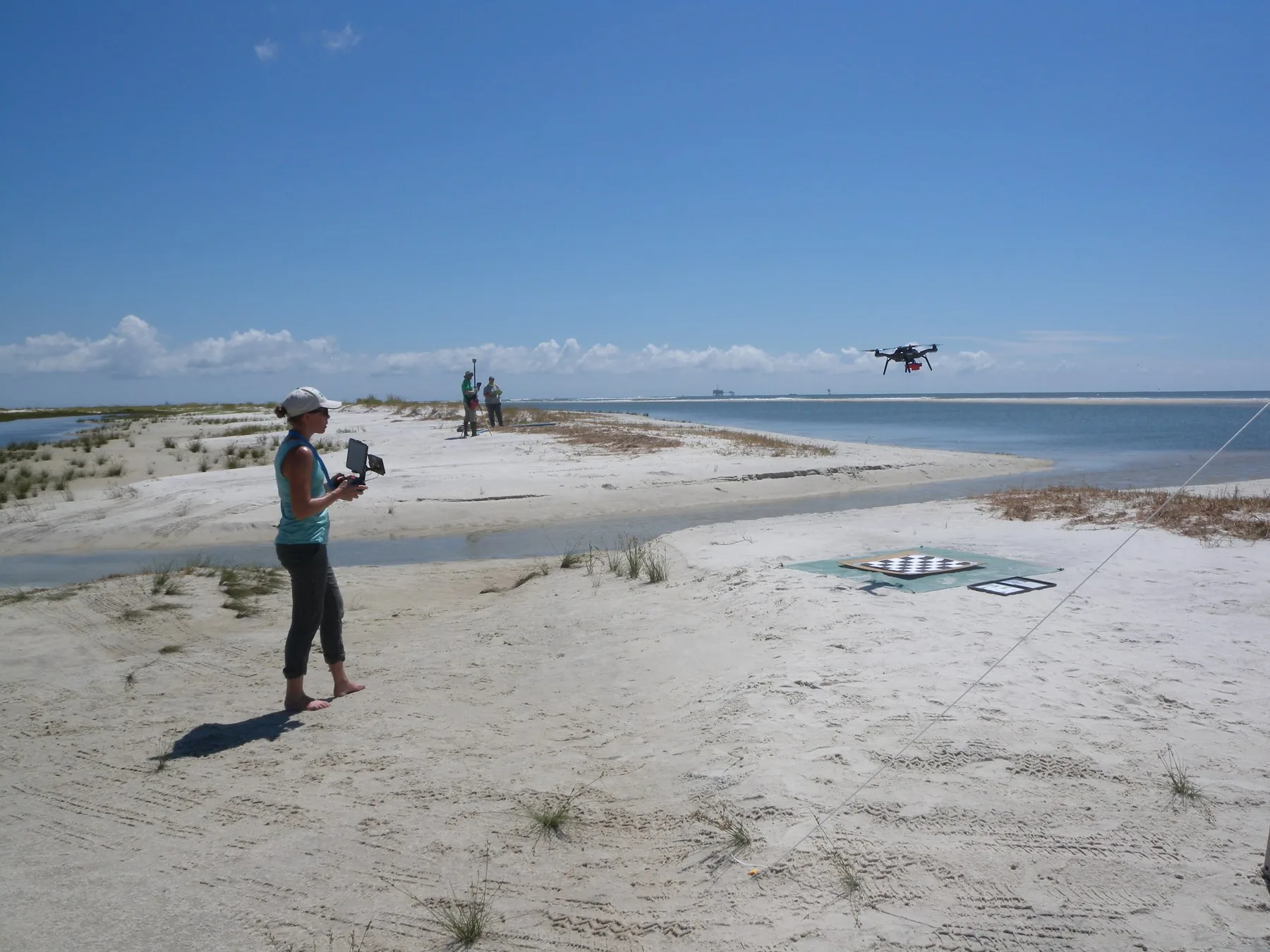
A UAV, or unmanned aerial vehicle, is the aircraft. A UAS, or unmanned aircraft system, includes that aircraft and the equipment needed to operate it. Drone is the everyday term, usually referring to the aircraft in an aviation conversation. The distinction matters when a specification, purchase, or incident report needs to identify exactly which parts are involved.
These descriptions overlap. A remotely piloted quadcopter can be called a drone, identified as a UAV, and operated as part of a UAS. None of those labels alone establishes its autonomy, mission capability, or permission to fly.
On This Page
- UAS, UAV, and drone compared
- What changes when the aircraft becomes a system
- Remote piloting and autonomy describe a different distinction
- Why different failures need different names
- Applications depend on configuration, not the acronym
- Specify what is included
UAS, UAV, and drone compared
Use the term that matches the boundary you need to describe.
| Term | Meaning in this article | What it identifies | Useful wording |
|---|---|---|---|
| UAV | Unmanned aerial vehicle | The airborne vehicle, including its installed equipment | “The UAV carries the camera.” |
| UAS | Unmanned aircraft system | The aircraft plus its necessary operating equipment | “The UAS includes the aircraft, control station, and communications equipment.” |
| Drone | Common-language label | Usually the aircraft; the intended scope depends on context | “A drone collected the images.” |
The aircraft-versus-system distinction follows the FAA's UAS explanation. UAV and the broader everyday use of drone are also described in PX4's Basic Concepts. The example sentences are editorial illustrations, not quotations from a regulation.
In formal FAA language, unmanned aircraft, abbreviated UA, identifies the aircraft itself. The FAA explanation locates the defining absence of human intervention within or on the aircraft. A remote pilot on the ground is therefore consistent with an unmanned aircraft; “unmanned” does not mean nobody controls it.
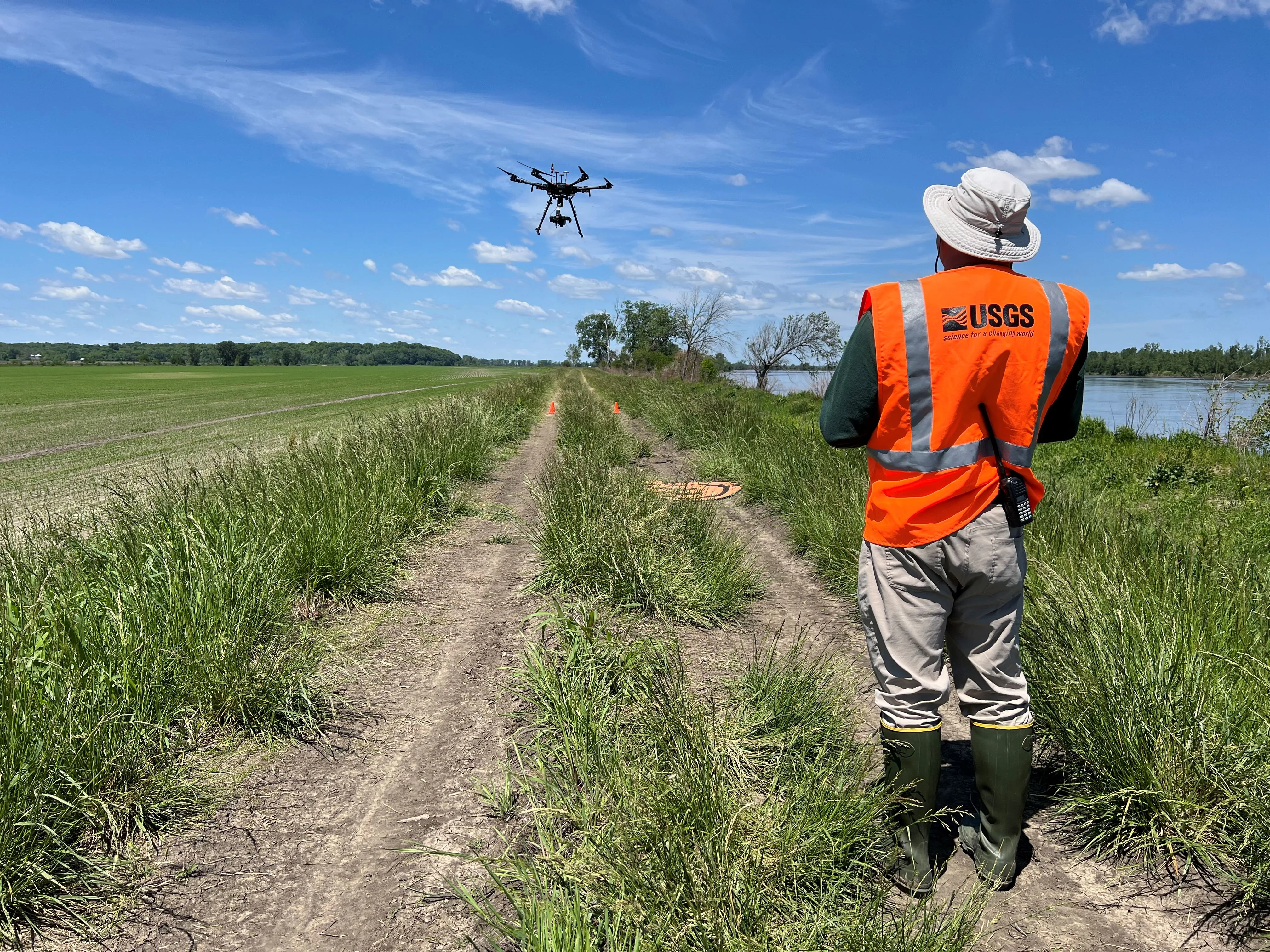
You will also see uncrewed in institutional writing. USGS, for example, expands UAS as Uncrewed Aircraft Systems in its river-sensing work. Preserve an authority's exact terminology when discussing its document, and define your own abbreviations once.
Drone is useful for general communication, but it needs context in a publication spanning several domains. PX4 uses the word for robotic vehicles on land and in water as well as in the air. An underwater drone is not a UAV: the “aerial” part of UAV narrows the domain.
What changes when the aircraft becomes a system
Consider an illustrative camera mission. The flying vehicle carries propulsion, a power source, flight electronics, and the camera. The pilot uses a control unit to command it. Communications carry instructions and return information. Equipment needed to launch or recover the aircraft may add another dependency. EASA's drone terminology guidance includes control and operating equipment in its explanation of UAS, including a launch catapult where applicable.
The operating principle becomes clearer if you follow three functions:
- Estimate the aircraft's state. Sensors feed onboard estimation software that determines quantities such as attitude and position.
- Control the aircraft. Control software compares a requested state with the estimate, then produces corrections that ultimately reach motors or other actuators.
- Exchange commands and information. The remote interface lets the pilot request actions and monitor the vehicle. A mission program can also provide instructions onboard.
This sequence reflects the PX4 architecture, an implementation example rather than a mandatory design for every aircraft. Here, the onboard flight controller performs the local control work. The remote pilot can request a maneuver without calculating each motor adjustment on the ground.
At the communications interface, distinguish commands from telemetry, which reports vehicle state. A protocol defines how messages are represented and exchanged; it is not the radio hardware itself. The MAVLink developer guide, for example, describes streamed data alongside mission and parameter exchanges, and communication both with ground stations and between onboard components.
For integration, ask which messages, commands, software versions, and payload functions both ends support. “MAVLink compatible” alone leaves those questions unanswered. Receiving a status message and successfully commanding a camera are different capabilities that should be demonstrated separately.
A command sent is not necessarily an action completed
The MAVLink command protocol shows why the interface deserves attention. A sender expects an acknowledgement and retries when it does not receive one. The response can report acceptance, rejection, or an operation still in progress. Acceptance means the flight software will attempt the requested action; it does not by itself prove that the action has finished.
For an operator, that creates three distinct questions: was the request sent, did the aircraft accept it, and did the requested behavior occur? A display should make those differences understandable. For a buyer, an integration demonstration should include a rejected or unfinished request, not just a successful one. The aircraft and ground software must communicate a useful result together. An aircraft specification alone cannot establish how well that exchange works.
Remote piloting and autonomy describe a different distinction
RPAS means remotely piloted aircraft system. EASA treats RPAS as a subset of UAS, which also encompasses fully autonomous systems. The term makes the remote-pilot relationship explicit; it does not specify an aircraft's shape or size.
Automatic route following does not settle whether an operation is autonomous. EASA distinguishes a predetermined flight during which a remote pilot must be able to intervene from autonomous flight conducted without pilot intervention. That distinction is more useful than treating every waypoint mission as proof of full autonomy.
When reading a capability claim, ask what the system does without a person: stabilizing attitude, following a route, selecting a new route, or handling an unexpected situation. Then ask when and how a pilot can intervene. Those answers describe the behavior more precisely than UAV, UAS, or drone.
Acronyms also do not establish an operating authorization. For a regulatory document, use that jurisdiction's definitions and the rules applicable to the proposed operation, rather than interpreting a supplier's preferred label as a legal category.
Why different failures need different names
“The drone lost signal” is too vague to explain an incident. A useful description identifies which function failed and what the aircraft could still do.
PX4's failsafe documentation distinguishes manual-control loss, loss of the ground-station data link, and loss of an acceptable position estimate. They are separate conditions, with behavior dependent on configuration and flight mode. Possible data-link-loss actions include holding, returning, or landing; a return is not a universal outcome.
| Reported condition | Question that makes it useful |
|---|---|
| Manual control unavailable | Did the aircraft still have a ground-station connection or an active mission? |
| Ground-station connection lost | Which configured timeout and response applied in the active mode? |
| Position estimate unreliable | Could the active flight mode still meet its navigation requirements? |
These questions are an editorial application of the PX4 distinctions. They are not emergency instructions for an unspecified aircraft.
The system boundary matters because an aircraft can retain working propulsion while a ground-side dependency fails. Conversely, a working radio cannot restore a failed navigation estimate. A useful system specification records both the required function and its contingency behavior.
Applications depend on configuration, not the acronym
Aircraft form affects mission fit. PX4 describes multicopters as suited to hovering and vertical takeoff, while fixed-wing aircraft generally offer faster, longer flight and wider survey coverage but cannot provide the same hovering capability. Hybrid vertical-takeoff designs add transition behavior and integration complexity. These are broad design tendencies, not matched performance results for specific aircraft.
For a close inspection, the ability to hold a useful camera viewpoint may matter most. For a broad-area survey, coverage and recovery arrangements may control the choice. Calling either aircraft a UAV tells you little about whether its payload, operating equipment, and data handling meet that mission.
A real example makes the distinction concrete. In a USGS river-flow research project, researchers described optical and thermal imagery, onboard computing, and processing methods for estimating surface-water velocity. The aircraft supplied the observation platform; the sensor and processing chain produced the measurement. The researchers also addressed how to assess uncertainty in the velocity estimates. The reported research does not establish that an arbitrary camera drone can make that measurement.
That same boundary question applies to photography, inspection, and mapping: what useful output must the whole arrangement produce, and which equipment and processing steps produce it?
Information rate is a system tradeoff
The ground interface does not necessarily receive every available measurement at the highest possible rate. MAVLink's message-streaming documentation explains that default message sets are limited to reduce channel traffic. A connected system can request additional messages or a different interval where supported.
That exposes a tradeoff between the detail and frequency of the information requested and the traffic carried by the connection. Define which states the operator needs, how frequently they must update, and what the display should show when information stops arriving. A fast onboard control loop and a slower ground display are different parts of the design; a changing number on a screen does not tell you the rate of the aircraft's internal control calculations.
For example, a program manager evaluating a survey system could request a demonstration with the intended telemetry streams and mission functions active together. Record whether required information remains available and whether commands receive meaningful responses. This is a proposed integration check, not a claimed test result or a universal message-rate recommendation.
Specify what is included
For an illustrative survey purchase, “supply one UAV” can sensibly describe the aircraft line item. It leaves the operating package uncertain. A clearer request would identify the aircraft and installed payload, then separately identify the control unit, communications equipment, launch or recovery equipment where needed, and the software and services required for the intended work.
Keep staffing, training, maintenance responsibilities, and data deliverables explicit too. They belong in an operational agreement even when they are not part of an authority's equipment definition of UAS.
Make each performance statement equally specific. Instead of accepting an unqualified claim of “system endurance,” ask whether it describes one aircraft flight, the controller's operating time, or the duration of the entire field activity. Ask which payload and operating conditions apply. The same word can otherwise conceal different boundaries, even before two suppliers use different test methods.
Also separate aircraft delivery from a usable work product. In the survey example, agree whether the deliverable is an aircraft, captured images, or a processed map. If processing is part of the agreement, identify who supplies the required software and who checks the result. These are different scopes of work, so comparing them as if each were simply “one drone” obscures what the buyer will actually receive.
Before comparing proposals, ask suppliers to list what is included, what must already exist at your site, and what needs a separate agreement. Require the exact supported configuration and the demonstrated command, telemetry, payload, and contingency functions. This is a practical consequence of the vehicle-versus-system distinction, not a procurement standard.
Use drone to communicate plainly, UAV or UA when the aircraft is the subject, and UAS when its operating equipment matters. Then name the components and behaviors that affect the decision. Precision comes from that description, not from choosing the most technical acronym.
Sources
- FAA: What is an unmanned aircraft system? Government explanation of the aircraft and system boundary.
- EASA: Drones (UAS) FAQs Regulatory guidance explaining UAS, RPAS, and automatic versus autonomous operations in the European context.
- PX4: Basic Concepts Project documentation describing terminology and broad aircraft-form tradeoffs.
- PX4: Architectural Overview Technical documentation explaining estimation, control, and onboard information flow.
- MAVLink Developer Guide Protocol documentation describing message exchange and supported message sets.
- MAVLink: Command Protocol Technical specification explaining acknowledgement, acceptance, progress, and completion distinctions.
- MAVLink: How to Request and Stream Messages Project documentation explaining limited default streams and configurable message intervals.
- PX4: Safety (Failsafe) Configuration Implementation-specific documentation distinguishing failure triggers and configurable responses.
- USGS: Inferring Surface Flow Velocities in Rivers with sUAS Government research account illustrating a sensor, aircraft, and processing workflow.
Last checked: September 6, 2026.