A drone ground control station, or GCS, is the ground-side system used to plan a mission, send commands, monitor aircraft state, manage payload data, and record what happened. It is more than a handheld controller. A complete GCS combines operator controls, computing, software, radios or network interfaces, antennas, displays, power, records, and procedures appropriate to the aircraft and mission.
The exact boundary varies. A small multirotor may combine most functions in one smart controller. A larger unmanned aircraft can use separate pilot and payload consoles, multiple data links, dedicated antennas, remote servers, and launch-and-recovery personnel.
In This Guide
- Separate the controller, datalink, and GCS
- Follow commands and data through the station
- Understand the core GCS components
- Choose a station form factor
- Assign operator roles deliberately
- Design handover and redundancy
- Define lost-link behavior before flight
- Treat interoperability as a scoped claim
- Specify the operating environment
Separate the controller, datalink, and GCS
A controller is the physical device through which an operator enters commands. It may have sticks, switches, a touchscreen, or a keyboard. A controller can be part of a GCS without being the whole station.
A datalink is the communication path between ground and aircraft. It carries some combination of command-and-control messages, aircraft telemetry, payload commands, video, and other mission data. The link includes radios or network equipment, antennas, protocols, frequencies, and the routing between them.
A ground control station integrates those controls and links with the computer, software, displays, power, records, and operator workflow. Calling any radio handset a GCS hides important dependencies. The operator may still need a mission computer, mapping data, telemetry display, video decoder, authentication material, and a power source before the aircraft can be safely controlled.
The aircraft's autopilot is another distinct element. It stabilizes the aircraft and executes accepted commands or mission logic onboard. The GCS requests, configures, and monitors behavior; it does not necessarily close every flight-control loop over the radio.
Follow commands and data through the station
The easiest way to understand a GCS is to follow its information paths.
Command and control moves toward the aircraft. The operator selects a mode, uploads a route, changes a setpoint, or commands the payload. The station software encodes that instruction, the ground radio transmits it, and the aircraft receives and evaluates it.
Telemetry moves toward the ground. The aircraft reports state such as position, altitude, speed, orientation, mode, battery, navigation quality, warnings, and link health. PX4 documentation, for example, describes MAVLink streams between the flight system and ground stations, with message sets and rates configured for the available channel.
Payload data may use the same path or a separate one. A low-rate sensor status message can share a telemetry channel. High-rate video, radar, or mapping data may require a separate radio, IP network, recording device, or processing chain. A station that can fly the aircraft is not automatically able to deliver every payload product.
Logs can exist in several places. ArduPilot distinguishes dataflash logs stored by the autopilot from telemetry logs recorded by the ground station. A program should decide which record is authoritative, how clocks are synchronized, and what remains available after a link interruption.
Understand the core GCS components
Most ground stations contain the following functional blocks, whether they are visible as separate boxes or integrated into one unit.
| Component | Primary job | Failure question |
|---|---|---|
| Operator controls | Enter manual, mode, mission, or payload commands | Which commands remain available if the touchscreen or primary controller fails? |
| Mission computer | Run GCS software, maps, calculations, and interfaces | Can the aircraft continue safely if the computer restarts? |
| Flight-planning software | Build routes, geofences, altitudes, actions, and contingency points | How are invalid or stale plans prevented from being loaded? |
| Command-and-control link | Carry safety-critical commands and acknowledgements | What latency, range, integrity, and coverage does the mission require? |
| Telemetry path | Return aircraft state and warnings | What information is lost first as the channel degrades? |
| Payload-data path | Carry video, imagery, measurements, or payload status | Is it isolated from control traffic, and where is original data recorded? |
| Antennas and RF equipment | Create the physical wireless connection | Are coverage, pointing, polarization, interference, and cable loss understood? |
| Displays and alerts | Present state, maps, video, and abnormal conditions | Can operators detect and prioritize the condition that needs action? |
| Power system | Sustain computers, radios, displays, and cooling | How long can the station operate after primary power is lost? |
| Recording and security | Preserve records and control access | Can commands, software changes, and user actions be attributed and reviewed? |
Cybersecurity crosses all of these blocks. Identity, privileges, software provenance, removable media, network exposure, encryption, message authentication, logging, patching, and recovery should be assigned owners. Protocol support alone does not establish that a deployment is secure.
Choose a station form factor
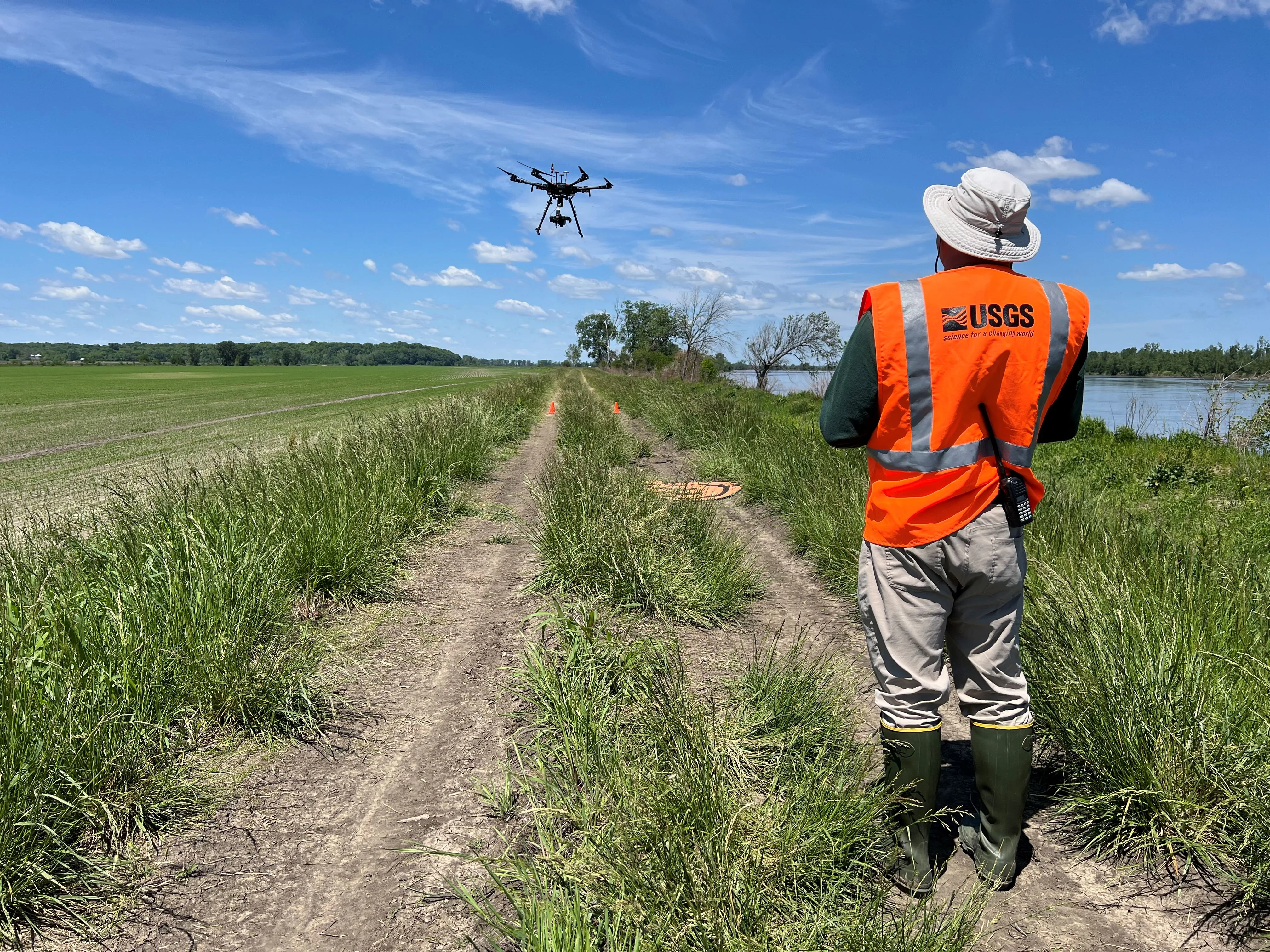
Handheld stations combine controls, display, computing, and radio in one portable device. They are fast to deploy and appropriate for many small-aircraft missions. Screen area, processing, antenna placement, battery endurance, ports, gloves, sunlight, and cooling can be limiting.
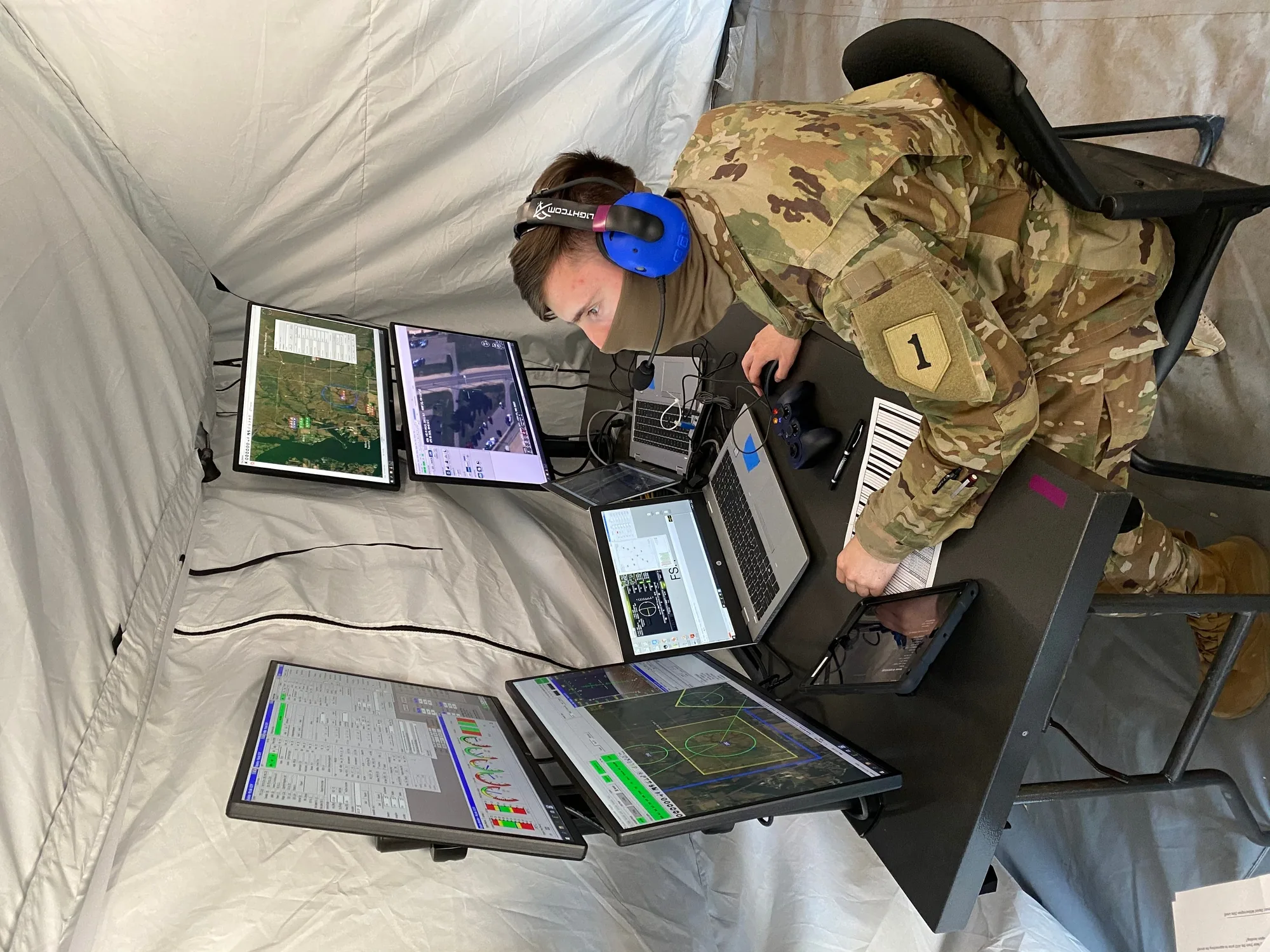
Portable case-based stations separate or enlarge displays, computers, controls, radios, and power while remaining transportable. They can support better ergonomics, external antennas, multiple networks, and replaceable modules. Setup time, cabling, weather protection, and transport weight become part of readiness.
Vehicle-mounted stations provide power, shelter, communications, work surfaces, and room for multiple operators. They suit longer missions and heavier data processing but depend on vehicle placement, antenna geometry, heat management, and the ability to move or recover the station.
Fixed control rooms support persistent operations, multiple workstations, enterprise networks, recording, maintenance support, and remote aircraft. They can improve consistency and supervision while adding dependencies on facilities, wide-area communications, servers, cybersecurity controls, and remote-site coordination.
Choose the smallest form that supports the mission's displays, links, staffing, endurance, records, and contingencies. Portability is not only physical size; it includes how long the station takes to establish, verify, and dismantle.
Assign operator roles deliberately
A simple system may put aircraft control, payload operation, airspace awareness, communications, and mission decisions on one remote pilot. That can be suitable when workload is low and the interface keeps essential information visible.
Complex missions divide work. A pilot may control the aircraft while a payload operator aims a sensor and manages collection. A mission commander or coordinator can manage priorities and outside communications. Launch-and-recovery personnel may control a local phase while another crew handles the mission through a beyond-line-of-sight link.
NASA flight-test documentation provides an example of role definition: a ground control station operator can serve in different command capacities, with responsibilities including monitoring weather, clearing the operating area, monitoring the vehicle, and maneuvering as required. That example is program-specific, not a universal crew rule, but it shows why authority should be written before operations begin.
For every position, define:
- who has authority to command the aircraft and payload;
- who monitors link, weather, airspace, and system health;
- which alerts each person must acknowledge;
- who can change a mission or contingency setting;
- how verbal and digital handoffs are confirmed; and
- who records an anomaly and decides whether to continue.
Design handover and redundancy
Handover is the controlled transfer of monitoring or command authority between people, consoles, radios, or sites. It may support a shift change, a transition from local launch control to a remote mission station, or recovery after equipment failure.
A safe handover identifies the aircraft, current mode, active route, payload state, fuel or battery state, link quality, relevant constraints, and receiving operator. The system should make command ownership visible and prevent two stations from issuing conflicting instructions.
Redundancy must be tied to a failure. A second screen does not help if both displays depend on one computer. A backup radio does not help if it shares the failed antenna, power supply, network route, or credential. Trace common dependencies through power, cooling, clocks, software, maps, networks, and operator access.
Test the transition, not merely the spare component. The acceptance case should show how the backup gains current aircraft state, how authority transfers, how the crew recognizes success, and what happens if the transfer is incomplete.
Define lost-link behavior before flight
Lost link means the expected command or telemetry connection is unavailable or degraded beyond a defined threshold. It is not one universal event. The command uplink may fail while telemetry remains, video may disappear while flight control continues, or a network path between a remote operator and a local radio may fail while the radio still reaches the aircraft.
The aircraft's response is normally configured before flight. Depending on the system and mission, it may hold, follow a contingency route, climb or descend, return, transfer to another link, or land. The correct behavior depends on terrain, airspace, endurance, communications coverage, people on the ground, and recovery options.
The GCS must show operators which path failed, whether the aircraft accepted a contingency, and how much uncertainty remains. Rehearse partial failures as well as total loss. A reassuring "connected" indicator can be misleading if it represents only one of several required data paths.
Treat interoperability as a scoped claim
Interoperability can mean exchanging video, reading telemetry, controlling a payload, changing a flight path, or conducting launch and recovery. These are different levels of authority. NATO's public explanation of STANAG 4586 describes five levels progressing from receipt of processed data to full flight control including takeoff and landing.
A claim that a GCS is "STANAG 4586 compatible" or "MAVLink compatible" therefore needs scope. Identify the edition, message or service set, vehicle, payload, control level, security configuration, and functions actually demonstrated. A shared protocol does not guarantee matching semantics, user interface behavior, timing, safety logic, or certification status.
Open-source autopilot ecosystems illustrate the same point at a smaller scale. ArduPilot supports multiple ground-station applications, but its documentation notes that feature depth and compatibility differ among them. Test the exact aircraft firmware, GCS version, radio, payload, and mission functions intended for use.
Specify the operating environment
A GCS specification should cover more than software features. Record temperature, rain and dust exposure, sunlight readability, wind loading for antennas, vibration, electromagnetic environment, grounding, cable protection, setup space, seating, lighting, noise, and transport.
Power planning needs normal load, peak load, startup behavior, battery runtime, generator quality, charging, and graceful shutdown. Communications planning needs frequency authorization, terrain, antenna height, line of sight, interference, bandwidth, latency, routing, and backhaul availability.
Human factors matter as much as enclosure ratings. Operators need an interface that keeps aircraft state and critical alerts visible while they manage maps, video, communications, and checklists. A technically capable station can still create risk if essential warnings are buried or one operator must continually switch between competing displays.
Specify the station as a complete system
A useful GCS specification begins with the mission and traces every necessary command, status message, payload product, operator decision, and record through the ground system. Then it assigns form factor, links, displays, roles, power, security, and contingencies to those needs.
Do not buy a controller and discover later that the mission also requires a separate video chain, high-gain antenna, network service, logging computer, second operator, or backup power. Define the complete station boundary, test its failure paths, and state exactly what interoperability has been demonstrated.
Frequently Asked Questions
Is a drone controller the same as a ground control station?
Not necessarily. A controller is an input device. A complete GCS also includes the computing, software, communications, displays, power, records, and procedures needed for the mission.
Can one GCS control different drone brands?
Sometimes, within a documented integration scope. Shared protocols or standards can enable functions, but the exact vehicle, firmware, messages, payload controls, safety behavior, and authority level must be tested.
Does video use the command-and-control link?
It can, but many systems separate high-rate payload data from safety-critical command and telemetry traffic. The architecture depends on bandwidth, latency, range, and resilience requirements.
What should a drone do when the GCS link fails?
It should execute the approved preconfigured contingency for that aircraft and mission. Possible behaviors include holding, following a contingency route, returning, transferring links, or landing. The choice must be validated against the operating environment.
Sources
- NATO overview of interoperability and STANAG 4586
- PX4 basic concepts for control, telemetry radios, and GCS use
- PX4 MAVLink messaging overview
- PX4 MAVLink peripherals and stream configuration
- ArduPilot ground-station software overview
- ArduPilot flight and telemetry logs
- NASA ground control station operator roles in flight testing
Last checked: September 4, 2026.